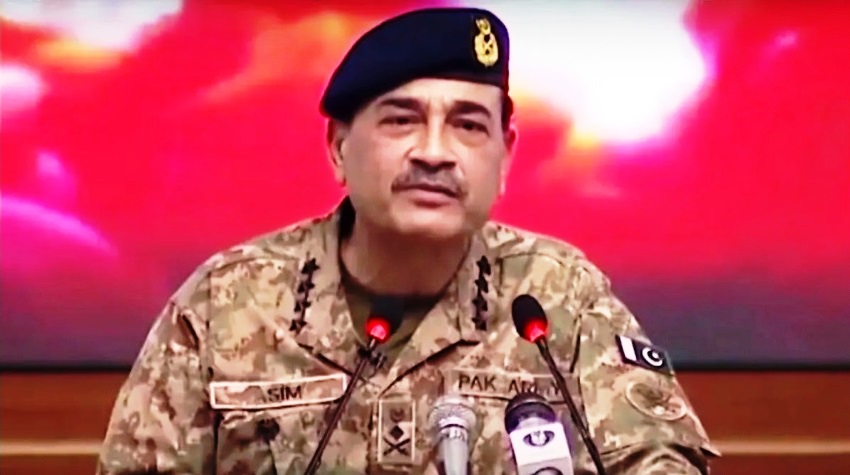
General Asim Munir, Pakistan’s Field Marshal, received a notably low-key or almost derogatory welcome during his recent visit to Iran, triggering sharp debate in diplomatic and defence circles about Pakistan’s eroding regional standing. According to multiple reports, Iran despatched only a third-tier minister to the airport to greet the visiting Pak dignitary, a protocol breach that has been widely interpreted as a deliberate diplomatic snub.
Adding to the optics, Pakistan’s Interior Minister Mohsin Naqvi personally travelled to the airport to welcome General Munir, an unusual move that appeared to compensate for the absence of senior Iranian counterparts. Notably, no high-level Iranian leadership or members of the core negotiation team were present at the reception, further highlighting the lukewarm response from Tehran.
This episode comes at a time when Pakistan continues to grapple with severe internal instability, economic fragility, and a shrinking circle of reliable allies. Defence analysts observe that Iran, facing its own complex geopolitical pressures, appears increasingly unwilling to extend prestigious treatment to Pakistani military leadership. The contrast is particularly telling given Pakistan’s repeated attempts to position itself as a key player in regional security architecture.
The incident reflects broader challenges for Islamabad. Once considered a significant actor in West Asian dynamics, Pakistan’s influence has visibly waned amid its domestic political turmoil and over-reliance on military-centric diplomacy. General Munir’s visit, ostensibly aimed at discussing border security and bilateral cooperation, seems to have yielded little in terms of tangible diplomatic dividends.
For India, the development reinforces the assessment that Pakistan’s strategic relevance is diminishing in key neighbourhoods. As New Delhi strengthens its own engagements across the Gulf and West Asia through robust economic and defence partnerships, Pakistan finds itself increasingly sidelined. Tehran’s restrained reception may also signal a pragmatic recalibration by Iran, which has shown growing interest in balanced relations beyond traditional fault lines.
The episode serves as a reminder of the costs of political mismanagement and adventurism. While Pakistan’s military establishment seeks to project strength abroad, such incidents expose the hollowness of its diplomatic posture. As regional power equations evolve rapidly, Islamabad’s shrinking leverage is becoming difficult to ignore.