The recent rescue operation following the Gondola cable car incident in Gulmarg, Jammu and Kashmir, has once again brought into focus a characteristic often associated with the Indian Army’s operational culture: leadership from the front.
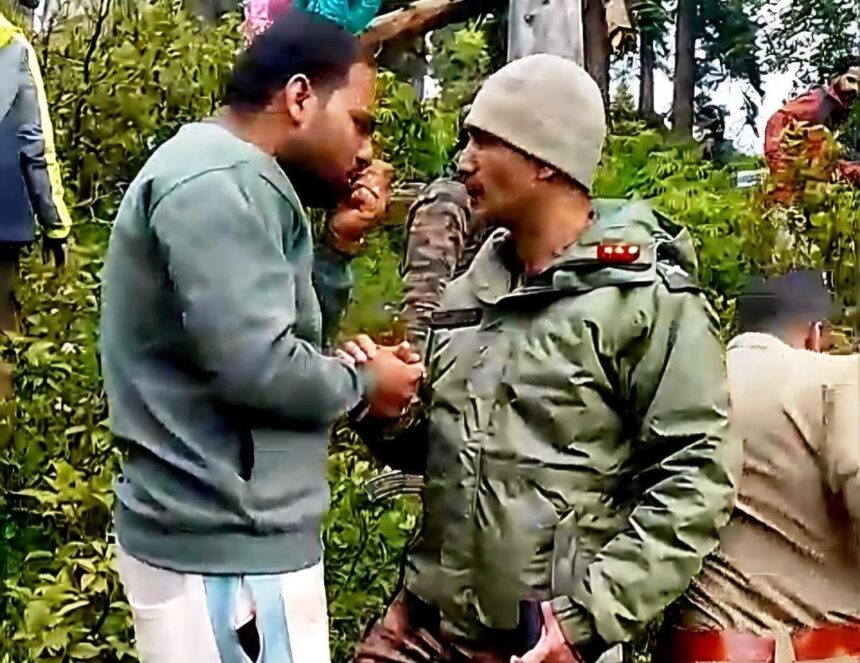
According to videos circulating on social media and reports emerging from the scene, Major General Puneet Doval, Sena Medal, Commandant of the prestigious High Altitude Warfare School (HAWS) and an officer commissioned in Gorkha Rifles regiment, played a direct role during the rescue efforts after civilians were stranded during the Gondola disruption. Witnesses and field accounts suggest that the senior officer personally reached the ground to oversee elements of the operation, encourage rescue teams and reassure stranded passengers during a tense situation.
The Gulmarg Gondola, among the world’s highest cable car systems and a major tourist attraction in Kashmir, draws thousands of visitors annually. Any disruption involving the installation immediately raises safety concerns due to the difficult terrain and weather conditions that frequently complicate emergency responses.
Military leadership experts often describe ‘Leadership from the front’ as a force multiplier during crisis situations. In high-pressure environments, the visible presence of senior commanders can have a significant impact on morale, decision-making and operational cohesion. Such actions also reinforce confidence among civilians during emergencies.
The Indian Army has witnessed several recent examples of similar field leadership. During rescue and humanitarian assistance operations in the Himalayan region after natural disasters, senior officers have frequently supervised efforts directly on the ground. During the evacuation of civilians from conflict zones under missions such as Operation Ganga, military and government teams maintained close operational oversight amid rapidly changing circumstances. Likewise, during relief operations in flood-affected regions of northern India, commanders have often coordinated rescue efforts alongside troops.
The Gulmarg episode serves as a reminder that in military institutions worldwide, leadership is measured not only by rank and command responsibility, but by presence, composure and the willingness to stand alongside personnel and civilians when circumstances become most challenging.